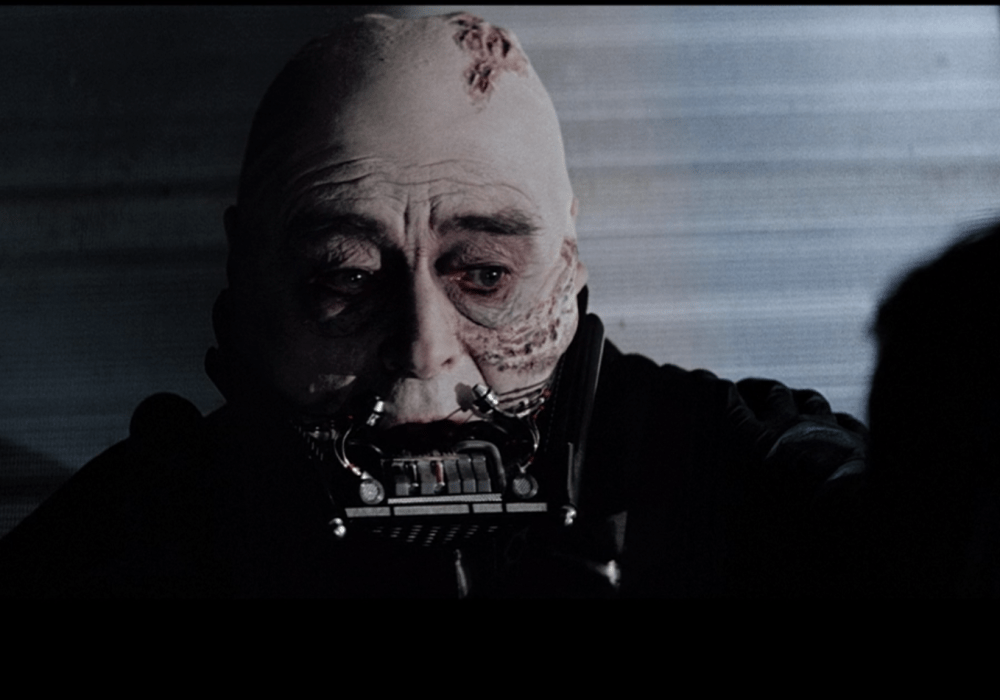
“We’re not sorry that we tricked you”
We had a TV in the large, ground floor family room our suburban house offered before my parents converted it to a studio apartment for rent when they couldn’t make ends meet on my mother’s sole consistent income and my father’s sporadic, dysfunctional alcoholic income. This conversion happened so early in my life that I only have a few memories of spending time in the family room; these memories are happy and cherished. Memories of playing with my Skeletor and Cobra Commander. Memories of Christmas morning’s Nintendo Entertainment System set up– reveling in the disbelief that my parent’s actually got me one; reveling in the newness of the experience. Playing Duck Hunt (1985) at the advised six-foot distance from the television, measured with precision, probably for the only time. Probably the only time playing Gyromite (1985) as intended while watching ROB the Robot interact with the television in what felt like the future unraveling right then and there in our ground floor family room.
My dad and I would hang out in the family room on lazy weekend afternoons, where he’d watch TV and presumably drink– I was blissfully unaware at the time– and I’d be on the floor playing with my action figures and wooden blocks as he’d be flipping channels with his large, wired, cable TV remote. Every time he’d land on something that had the 20th Century Fox fanfare, I’d hope it was Star Wars. It never was, and I don’t know how I knew the 20th Century Fox fanfare may indicate an impending showing of Star Wars or if I just wished every movie that came on were Star Wars, but I know I never got my wish. My dad usually insisted on watching Star Trek (1966-1969) or M*A*S*H (1972-1983).
I hated Star Trek and M*A*S*H. I would complain endlessly to my dad, who would seem baffled that a five-year-old boy didn’t like TV shows about space and war. He seemed unable to understand how these shows could be boring for a little boy while simultaneously carrying the visual trappings of things boys typically liked. As an adult, I know these shows were written for adults. They weren’t meant for kids even if they looked that way. My dad was trying to trick me.
I wanted Star Wars and they weren’t Star Wars. They were boring.
Return of the Jedi (1983) was the first movie we went to the shopping mall multiplex to see as a family– my father, my mother and me. I was three years old and I hadn’t seen the first two parts of Star Wars beforehand– something that didn’t seem to matter. I had absorbed Star Wars through the cultural zeitgeist. Star Wars to me was about space ships and laser swords. Star Wars was about Luke Skywalker and Darth Vader. It didn’t matter if Star Wars was about much else– this is what Star Wars was to me and seeing Star Wars for myself was all that mattered. I needed to see how Star Wars ended. I thought seeing the end of Star Wars was all that really mattered, anyway. How something ends feels like it matters the most.
I thought Star Wars was mostly about Darth Vader. Despite not having seen a single Star Wars movie, I had been obsessed with Darth Vader: he was Serpentor and the Cobra Commander combined. Pop culture presents its iconography to children in glimpses and flashes; in loud, overpowering images that register pre-verbally. I didn’t need to know what Darth Vader did. I didn’t need the story of Darth Vader to intuitively understand Darth Vader. Darth Vader looked cool and kicked ass, like Skeletor and Megatron, but with an additional element of mystery: Darth Vader wore a mask. Darth Vader had sometime to hide.
I knew I needed to see his final battle. I needed to see the end of Star Wars. I needed to see the end of Darth Vader.
I needed to see Darth Vader’s face. I needed to know who this veiled space menace truly was. Presciently, I knew this would happen at the end of Return of the Jedi. Even at three-years-old, I knew Darth Vader’s face would be revealed by the movie’s end. I felt this was all but guaranteed– this, I thought, was why people wanted to see Return of the Jedi; to see the end of Darth Vader; to see his face revealed; to see who Darth Vader really was.
Sometime during the movie, I told my mother I had to go to the bathroom. I had to pee. As irritated as the mothers of toddlers will be at their toddler’s unpredictable and inherently nonsensical bladder necessities, my mother reacted with irritation: she reminded me that she had taken me to the bathroom before the movie started. She told me to wait. It wasn’t an unreasonable request. I couldn’t wait. I pissed myself. My mother reacted with the kind of irritation mothers of toddler’s will have when faced with a moment they’ve deemed crucial to their own lives met with the cold reality of toddler piss. My mother took me to the bathroom to quickly clean me.
We got back before the movie’s end. We got back as the final confrontation between Luke and Vader had just begun. Realizing I had missed nothing of importance, I relished the moment in my dry underwear. After Vader’s defeat, I had my moment. I got to see his face. I got to see who he really was. The final moments of the movie felt perfunctory– the Ewoks celebrating, the galaxy safe; Luke burning his father’s body– and it animated itself before my tired three-year-old eyes. I got what I wanted; I had seen the end of Vader. I had seen the face of Vader. I had seen the real Vader.
I learned that Darth Vader was an old man.
***
Johnny Rotten’s last words on stage with the Sex Pistols was an answer in the form of a question– Alex Trebek would have been proud. He asked, “[did you] ever get the feeling you’ve been cheated?” A question directed more at himself than the audience; maybe directed more at anyone who’s ever existed than just those at the Winterland that night. A rhetorical question for Rotten to make a point– rock stardom wasn’t what he was expecting.
The Pistols were on the tail end of a disastrous U.S. tour where manager Malcolm McLaren had booked them to play “redneck bars” across America’s deep south as a means of provoking violence. He wanted media coverage. McLaren wanted the Pistols to be rock and roll’s most dangerous band. Concurrent to this their heroin addicted bassist, Sid Vicious, was rapidly self-destructing. The band was so caught up in perpetuating their outlaw, anarchist image that it became what solely defined them. Any attempt at enjoying success would change these inherent components. Any deviation from their gutter muck reputation would mean they were no longer The Sex Pistols. They had hit a neverending dead end– Johnny realized he was sold a rotten bill of goods. That punk rock stardom was a misnomer; an oxymoron; a big nothing; a TLC reality star thrilled to be on TV but at what price? Here Comes Honey Boo Boo (2012-2017) stuffed in a bikini with a mouth full of spaghetti.
Punk rock stardom wasn’t even a cheap generic, it was a scam email counterfeit; gas station dick pills with printer ink and sawdust. It didn’t contain the same active ingredients as genuine rockstardom; it was worthless. There were no credit cards and private planes, nor hotels and fancy clothes– this wasn’t a classy affair, and they weren’t KISS. They never would play suburban hockey arenas, and their album wasn’t the multi-platinum selling Love Gun (1977). They were the dirty, low-down Sex Pistols– broken glass and bar fights– and they always would be. Johnny Rotten felt cheated.
Punk rock stardom was a neverending dead end.
A neverending dead end.
I woke up one morning when I was thirty-two years old and broke up with my fiance. We were engaged in a way that people say they’re engaged when they’ve decided, abstractly, that a shared goal is marriage without having the proper items in their inventory to achieve said goal and actually marry. I went to sleep the night before knowing with certainty that I had hit a neverending dead end– my game was over and I had been playing for years in a zombified state. I woke up that morning and from the dialogue box options available, I chose: I don’t love you anymore and we’re breaking up over our normal morning routine. Having planned this break up with the same thought and care one would take in preparing for a video game’s final boss, I defeated her quickly and had her successfully packed and moved out within a few hours. I played things beautifully and she left happily.
Starting over with nothing is a strange, wonderfully awful netherworld to find yourself in at thirty-two years old. A place between life and death; between hope and letting go. Maybe it would have seemed less dire with only half a decade removed or perhaps completely devoid of any further possibility just five years after the fact– but being thirty-two with nothing is a beautiful purgatory; a thinking man’s block of clay; a lesser man’s gateway to hell. For most probably some combination of the two, its exact ratio decided by everything that’s made you what you are to that point: nature and nurture, inflection point decisions made ten, fifteen, or twenty years prior; experience and health; wit and skill.
As the log days turned into short months, this seemingly antithetical combination of liberty and dread churned inside of me. There were new women I had gotten to know– I liked hearing their stories. In retrospect, these stories were more interesting than the sex we’d end up having, although I can’t say I treated both with the same degree of urgency at the time. Sex was the goal; sex was my marker for success. Sex was the result of having finally hammered down the winning play strategy to get past the first screen of the game– putting Piston Honda down and getting on to Don Flamenco– a strategy I had only lucked upon a handful of times prior. I finally had a handle on what I was doing. A master of my domain; I was now in control of all things.
Still, I enjoyed their stories. I enjoyed getting to know them as people. Some of their stories would come before sex, usually with a lot more added after. They enjoyed having someone to confide in; someone non-judgemental; someone as broken and disparate. Their lives had taken shape through a different series of events– different inflection point decisions made; the wrong dialogue box choices made at the wrong times. While their game was different they still faced the same neverending dead end; their lives stuck in the same zombified state. I wanted a glimpse into their lives but I couldn’t fully enter their stories. At every decision making prompt, in the face of explicit confrontation and ultimatums given, I would avoid commitment at all costs. I couldn’t commit. My body wouldn’t let me commit.
Once it occurs to a person how tiny decisions made create long-lasting ripples… How easy it is to get lost in what was initially considered a fun diversion; a side quest that grows and spreads with the organic rapidity of cancer cells tearing through flesh until it overtakes the main campaign and becomes its own beast to slay… Once you realize how the end product of these tiny decisions– getting home drunk and calling a girl in December of 2007– can only end up being measured in the magnitude of years… there’s some cold invisible ratio buried in your battle damaged subconscious that reflexively forbids any further poor decision making.
I had hit my tipping point. The ratio of thinking man to fool– innocence to experience– had favored avoidance. I couldn’t allow myself to stick my hand in the bee hive again, even if the outcome was inherently unknowable: wasps or honey, I’d live on without a tale to tell. What I knew for certain was the ultimate weight of these decisions. The magnitude of years.
A neverending dead end.
The first point-and-click adventure game I ever played was Maniac Mansion (1987) for my Commodore 64. My dad took me to Toys “R” Us for a new computer game despite it being neither a birthday nor a holiday. It was a regular day and I was there to buy a computer game, which was entirely different than a stupid, old Nintendo tape. This was a classy and intellectual affair. This was software.
I had been obsessed with mansions since renting Clue (1985) from Movieland– our gorgeous, local, mom-and-pop owned video store. The excitement I felt seeing its box on the video store shelf after suffering the endless winter between theatrical run and VHS release cannot be understated. I loved the idea of a beautiful, ornate, Victorian mansion to explore and get lost in, with rooms secluded and places to feel alone. I loved the idea of a study and billard room. A black-and-white tiled kitchen. I wanted a ballroom and conservatory. I wanted a dank and shadowy cellar.
Clue stands as one of the best movies of the decade partially for its refusal to properly adhere to a single genre. Clue is a character driven comedy attached to a legitimate whodunnit murder mystery; Clue has as many creepy moments as it does one-liners. Clue was ambitiously released to theaters with three separate endings distributed at random. The idea was to mirror the board game’s 324 possible combinations of who, what, and where solutions; the idea was for enthusiastic movie goers to run around from theater to theater seeing Clue multiple times in order to catch every ending. This marketing strategy did not work, and Clue made slightly less than its $15 million budget during its box office run… but it was the emerging home video market where the movie found an audience. The home video release of Clue contained all three endings.
I loved Clue for all of the above stated reasons but mostly for the mansion. Clue allows space for the viewer to feel like the final guest of the evening; an invisible voyeur exploring the mansion alongside the active players. Clue allows viewers to hang out in its different rooms; Clue was as much about ambiance as it was mystery and comedy. Clue was a masterpiece. So, when I saw Maniac Mansion on the store shelf, with its gorgeous box art featuring its cast of wacky characters painted in dusk’s twilight with the foreboding mansion ominously in the background, I knew I had to have it. I wanted to explore the maniac mansion; get lost in it; feel alone in it.
The first title produced by LucasArts – George Lucas’ video game company– Maniac Mansion built on the foundation of text driven adventure games like The Hitchhiker’s Guide to the Galaxy (1984), where the player is given a short paragraph explaining their situation and nothing more:
You wake up. The room is spinning very gently round your head. Or at least it would be if you could see it which you can’t.
From here, the player uses verb/noun combinations to explore their surroundings. The vocabulary of the game was limited; the game understood some commands while not understanding others. The game wouldn’t accept “use” as viable language but understood “examine.” The player’s job was to fumble with words, exploring the possibilities of different combinations while sometimes having a bit of fun seeing how the game would respond to silly commands (“eat pillow”). Douglas Adams co-designed the game and sometimes even seemingly random commands would result in hilarious rebuttals. Every bit of progress, resulting in a new block of text to explore, was satisfying… but as the game progressed in complexity, without any visual cues, it was easy to get lost.
Maniac Mansion solved this problem by turning the text-only adventure into a point-and-click graphic adventure. The player would point the cursor to where they wanted their avatar to go and click. At the bottom of Maniac Mansion’s screen was a word bank of verbs. This made the game only slightly easier for a seven year old– Maniac Mansion’s multiple solutions still had the seemingly random, impossible to deduce logic that was a hallmark of early adventure games… or at least it seemed that way to a seven year old. Maniac Mansion gave me everything I wanted, fulfilling every promise the gorgeous box art had made. I explored the mansion with glee, each new room filling my guts with nervous excitement. However, the game came straddled with one fatal flaw that was common in early adventure titles: the neverending dead end.
The solutions to these early adventure games were so incredibly precise, the right items, used in the right order, at the right time, that the game was impossible to win any other way. If any of these vital items were lost– if Wendy died with the empty glass jar in her inventory– the game would be rendered unwinnable; an impossible mission that trudged along lifelessly with the unwitting player never the wiser. God help you if you forgot Authur Dent’s toothbrush in his house before it was demolished. Twelve hours in to Hitchhiker’s Guide to the Galaxy, aboard the alien ship, at the very end of the game, you’ll need that toothbrush to finish. Sadistically, the game chose these winning items randomly with every restart.
Sometimes you don’t know what you’re missing until you need it most.
***
The Rise of Skywalker (2019) was the last movie we went to the shopping mall multiplex to see as a family– my father, my mother and me. It occurred to me a few years prior that going to the movies on Christmas Eve might be a nice thing for the three of us to do. Holidays with a table full of extended family had been a thing of the past for a while by then, either through death or estrangement, and my parents never went to the movies on their own. I knew they’d appreciate it. After all, my dad was a movie guy. There was something that felt right about seeing Star Wars on Christmas– something cozy and American about Star Wars, especially on Christmas. Star Wars resonated in a way that any other film franchise wouldn’t have; that any other movie couldn’t have. A different movie wouldn’t have had the same emotional gravitas as Star Wars. Sometimes old stories are what we need most.
The Force Awakens (2015) met its release in the twilight haze of an era’s end. Donald Trump announced his bid for the 2016 presidential election only six months prior– it was still considered a lunatic fringe position to think he had a chance. I was part of that lunatic fringe, but it didn’t matter. Politics had not yet become ubiquitous to American life– a necessary obsession for all people living under the rainbow. The Force Awakens was a product released at the cusp of this paradigm shift. The Force Awakens was the last of its kind. I took my parents to see The Force Awakens for all the above reasons. I thought it would be a nice thing to do before sitting down for dinner at a Zagat rated steak house; a nice, middle class American Christmas Eve. My parents were getting noticeably older at the time yet they were still functionally the same people– something I can only appreciate in retrospect. We took a selfie outside the Zagat rated steak house. I am grateful for that picture.
As much as I wanted a nice, family Christmas Eve, the more pragmatic side of me knew it was a good opportunity to see the shitshow that was to be Disney’s reboot of the presumed dead Star Wars film franchise. Three years fresh into my neverending dead end and I had managed to build an entirely different understanding of the world around me. I had become some combination of realist and cynic– a cold invisible ratio buried in my battle damaged subconscious. I came to believe people were little more than rats on a sinking ship; automatons being haplessly led to their own destruction like Lemmings (1991). I came to see the world as a massive con which only the naive bought full heartedly. I was no fool.
I was no fool and understood what I was getting with the modern action movie. I was aware of the controversy behind Mad Max: Fury Road (2015) when I went to see Terminator: Genisys (2015)– I knew going in what the deal would be. The action movie was traditionally considered a boy movie; now it was being written as a girl movie. It retained its masculinity in image only: with explosions and franchise familiarity. It posed as a boy movie while delivering a female-centered story. Women were the true protagonists and the male leads acted as subordinates; there would be no princess who needed saving. I was no fool and I knew these rules would apply to The Force Awakens, and as much as I wanted to put together a nice Christmas Eve for my parents, I also had a pragmatic goal: I wanted to hate watch The Force Awakens. I wanted to be hater.
I got what I wanted. Like in Terminator: Genisys, The Force Awakens is a retelling of the original story but with a female lead in place of the traditional male. Like in Terminator: Genisys, this female is smart, strong, and never makes mistakes. Like in Terminator: Genisys, she is surrounded by men who are less smart and less strong– there are multiple scenes of them looking like geeks and goofballs. Like in Terminator: Genisys, the movie is secretly about the female lead and this secret is gradually revealed until it’s not a secret at all by the end of the movie. I got exactly what I wanted, and I hate watched The Force Awakens on Christmas Eve before going to a Zagat rated steak house with my parents.
On the drive to the steakhouse, I luxuriated in my hatred while my parents did what anyone normal does after going to see a movie. They talked about what they liked about the movie. They went to the movies to spend money on a having a good time– they went to the movies to have fun. They went to the movies to see a modernized version of something they were already familiar with; something they knew as part of a universally shared culture they enjoyed participating in. They enjoyed The Force Awakens.
I was happy they had a good time but I’d be lying if I said part of me didn’t burn with silent irritation. I questioned their enjoyment. I questioned why Rey, the sequel trilogy’s new Luke Skywalker, was just good at everything right away. I questioned why Kylo Ren, the sequel trilogy’s new Darth Vader, was defanged and emasculated within in the first half of the movie– cursed to linger on as a toothless threat for two more full length films. That The Force Awakens was just a copy-and-paste of the first movie with the volume turned all the way up to parody– that the new Death Star was bigger and badder than the first; the new rebels were even scrappier; the new Empire more explicitly space nazis.
My parents didn’t seem bothered by any this, which only made my silent irritation burn hotter. My mom said she liked that the girl outsmarted all the boys– she got a kick out of how Rey was immediately good at whatever the heroes needed. My mom liked that she always managed to one-up the boys. My dad agreed, that was funny, he said. He said he liked seeing “all that old Star Wars stuff.” They both said they loved seeing Harrison Ford as Han Solo again. They relayed this with the kind of warmth and cadence typically reserved for remembering old friends or recollecting once lost memories.
I was no fool– I knew Star Wars deserved better than this.
***
The first opioid I had ever taken was hydrocodone. Hydrocodone is the generic alternative to brand name Vicodin; my doctor gave me a prescription for recurring neck pain due to a herniated disk. According to Wikipedia, recreational use is most common, as popularized by Eminem– a broken Vicodin tablet adorned the compact disc of his major label debut The Slim Shady LP (1999); he referenced it often.
The delivery method of snorting Vicodin crushed under a credit card and dollar bill may not have carried any additional pragmatic value, but it wasn’t about pragmatism. Sitting at my computer desk at 2 AM, snorting lines of hydrocodone while shooting OkCupid messages off to the currently online fellow destitutes, it was about capturing a feeling. I wanted to feel like a rock star, and if I couldn’t have the brand name I was willing to settle for the generic.
Because maybe I felt cheated. Maybe I did what I thought was good and right and still came up with an unwinnable game; a neverending dead end. A relationship that would’ve been a “fun six months” stretched into a soul crushing five years. Five years with my budget Lindsay Lohan, generic starlet. The dollar store version but when you’re a working class man you’re happy with what you can afford– and maybe where you shop is predetermined by some cold invisible ratio of rock solid, immutable traits that loudly determine how romantically viable you are to the opposing sex. Maybe it was always a rigged game and you just didn’t know it as you were burning through money throwing softballs at bowling pins desperate to win the big stuffed pig.
Maybe it was my own damn fault. A series of bad decisions and poorly executed next moves. Not enough experience points; too many poor dialogue box choices made in succession.
I wanted the BPD girl. I wanted an IV of ecstasy to the jugular. I wanted the breakdowns, the red faced screaming; tearing up my t-shirts and tossing them out bedroom windows. Smashing my cell phone on suspicion alone. Because I cheated on her in a dream. Because her astrologer said it could be possible, maybe. Kicking my door down because I got the last word in a fight and it was a hell of a zinger. Watching her cry got me hotter than a thousand atomic bombs exploding on the surface of the sun. I opened the puzzle box and it tore my soul apart.
I did my best with it.
I did my best with it but it was a rigged game– bouncing baseballs off glued down bowling pins at the carnival; pushing the boulder up the mountain in hell. I thought I was working toward getting married. I thought I was the responsible one. That there’s nothing more attractive than a man with a job. A man needs to suck it up and do the right thing– a man should put his woman before himself. I thought of my father, man on the street in his mid-70’s leisure suit, happy to dispense his new age relationship advice of mutual respect and having a co-authored, shared vision: make her happy and she’ll respect you. Win her approval and she’ll love you for it.
I thought of Jason Seaver. I wanted to make Jason Seaver proud.
But I felt cheated and one day I said fuck it. I realized that none of what they say is important is actually important. My father was a fool. Women don’t want sensible decisions made with a boy scout’s standard of personal accountability. Women don’t care about about your job, or your carefully considered philosophy and worldview. Your air tight, Samurai-like code of morality. Your willingness to self-sacrifice. Your love of all things beautiful and good.
Women like self-absorbed, narcissistic assholes.
I attacked my neverending dead end with the egomania of Axl Rose on Appetite for Destruction; every ounce of Appetite for Destruction is soaked in sex, drugs, and chaos. Appetite makes Paul Stanely lamenting the trappings of rock stardom on Destroyer– questioning the emotional legitimacy of clout chasing groupies on album closer “Do You Love Me?”– seem adorably naive. Rose indirectly answers Stanley, just as my postmodern literature professor always said that “great works talk to each other,” with simplistic brutality on “It’s So Easy”:
You get nothin’ for nothin’ if that’s what you do,
turn around bitch I got a use for you
besides you ain’t got nothin’ better to do
and I’m bored
To Rose, it didn’t matter if you really really really, really loved him, “It’s So Easy” was his philosophy on life. Rose knew you could be a homeless junkie and still get pussy; that a corporate middle management position didn’t make women wet; that the fairy tales told about conscientious responsibility meant shit– the shit any man learns after getting laid pushing nothing but attitude: it’s so easy. Lines of hydrocodone and bored college girls, house sitting and home alone? Leave the door unlocked and I’ll be around by midnight. So damn easy.
Axl Rose was living the rock star lifestyle that gnarly impish punk Johnny Rotten felt promised– even before Guns n’ Roses made it big. While Axl was just a couch surfing beggar with nothing but the clothes on his back, he understood a lesson that Marilyn Manson learned a generation later: “If you act like a rock star you’ll be treated like one.”
So fuckin’ easy, and if I couldn’t have the name brand I was willing to settle for the generic.
***
It’s difficult to explain with precision the awful feeling I had one particular night after receiving the selfie I’d have Jessica send before she left the house for my apartment. I started having her take a selfie before leaving for me to look over and nitpick; ask her to change outfits or do something different with her make-up. She loved this type of detail orientated micro-management; this type of petty control. It turned her on and made her feel cared for. She was excited to share her selfie with me that night. She dyed her hair black at my request and wanted to show me even if it would ruin the surprise. The black hair was perfect for her pale skin tone. It made her big, sad blue eyes appear bigger and sadder. She looked incredible.
I met Jessica a few years prior. We would come and go like the seasons of a television show, occasionally falling into what playing house is to a relationship– a Hollywood facade; a nice looking house with no interior; an Ikea showroom with thin walls and fake books. She would eventually get fed up and tell me that she met someone else, or that she’s gonna start looking soon, or that she’s falling in love with me. I wouldn’t argue with her. I would wish her the best and mean it. Even if part of me wanted to be that person, more of me knew I couldn’t be.
I met Jessica when she was twenty-five years old. She was a virgin. It’s not that she was particularly attached to her virginity, but rather that she spent a lot of time alone. Her friend group was her family; her life was insular. She only trusted family, she told me. Outsiders made her anxious. She dropped out of college from too much anxiety. Being around so many people was difficult for her. The small talk college students make before class made her as nervous as when she’d get to class late and people would watch her sit down. Attending class became untenable. She dropped out and got a job at CVS where any dialogue exchange would be expected and controlled– this, she could do.
I met Jessica after her family moved here from California. She lived with her mother and sister in a small house which she helped support. Her mother was an alcoholic whose employment was sporadic and her younger sister was pregnant. She takes care of them both, she told me. She told me she was lucky to have her job at CVS– she didn’t want them to lose the house.
I met Jessica when she was trying to be more socially open to new experiences. She wanted to meet new people. She wanted to meet men– she wanted to fall in love and get married. She wanted to have a baby; she dreamed of being a mother. She was ready to try after a long stretch of time where she felt like her life was on hold. A long stretch where she felt trapped in a painting; a scene; an endless moment; a neverending dead end; a static age. She told me she was finally ready for something more.
I met Jessica ten years after her fifteenth birthday. She went to Disneyland that day with her mother and sister. She told me she can close her eyes and still feel glimpses and flashes of what she felt that day at Disneyland in her chest and stomach; in her whole body, if she allows her mind to wander for long enough. The emotions she felt that day, she said she hasn’t felt since. Memories can’t be all you have, she told me. They can’t replace experiences, even with enough mind wandering. She came home that day from Disneyland, with her mother and sister, and found her father dead in his car parked in their garage. He fed a tube from the exhaust through one of the windows.
I met Jessica when she felt like she had gone far enough denying herself the life she knew she was capable of having. She wasn’t the one who died, she told me. That night with Jessica, when she sent the selfie with her dyed black hair, dyed to finally win my approval, I had the awful feeling that things had gone too far and gotten out of control. Something a silent part of Axl Rose must have felt after causing football stadium riots with abruptly canceled concerts only half a decade after the release of Appetite for Destruction.
Taking place after Axl had become the biggest rock star walking the Earth– too big to find satisfaction in small scale chaos– Rose had become addicted to the assertion of power. Something he felt before MTV and rock god status. Something he felt as a couch surfing beggar living off lust struck groupies happy to invest in a ground floor start up. Happy to invest in a fantasy. The same fantasy Axl Rose clung to as a small town white boy on a Greyhound to LA: if you act like a rock star you’ll be treated like one.
But Jessica wasn’t looking for a rock star nor was she looking for someone who thought he was acting like one. Someone lost in delusion living the watered down generic alternative, but she liked how I talked to her all the same. She liked how I fucked her. Maybe she was as turned on dyeing her hair as she knew I’d be when I saw it. Maybe she knew our sex that night would be electric– explosive, a thousand atomic bombs exploding on the surface of the sun, and maybe she was right.
But maybe I knew things had gone too far. Maybe I finally pushed things beyond their breaking point. Maybe I wasn’t stuck. Maybe my life wasn’t over. Maybe I knew all along that it was a lie I was telling myself. Maybe I knew I wasn’t playing an unwinnable game; a neverending dead end. Maybe I knew that was bullshit. An excuse to justify bad behavior; to justify doing whatever the fuck I wanted: cheap sex and generic drugs. A generic party lifestyle that I thought I missed out on; that I felt entitled to. Maybe I knew I had been single long enough to have become the villain.
Maybe I knew this was the end.
***
There’s something about endings that stand out among memories like the final pages of a novel, dog-eared and patient, or a game forever saved before the final boss– a moment suspended in time; a place between hope and letting go. Endings feel like they matter more. Endings allow all points between past and present to converge. Endings remind us of the purity of how things began. The Rise of Skywalker was the last movie was saw on the last Christmas Eve we were able to go out to a movie and a Zagat rated steakhouse– my father, my mother and me.
Soon after things happened quickly: the world shut down; people were getting sick; my father was getting older. He started falling in the house. His legs would give out. When he couldn’t get up anymore by himself, my mother would come up with creative ways to help him get his big, sturdy body off the floor with her one-hundred and fifteen pound frame: “turn over, now put your left arm on the couch. Left. Left arm! For support. Now lean to the left and…” And then there came a time when he couldn’t get up anymore at all.
If I close my eyes and allow my mind to wander, I can still feel the grip of my father’s hand when I pulled him up from his theater seat after watching Rise of Skywalker. He still had strong hands. Despite everything, he was a proud man who was embarrassed to be seen with his son helping him up. Always the realist– the conscription of the only child– I made note of this moment as it happened: I knew it would be the last movie we saw together. The Rise of Skywalker is a fitting end for the cynic focused more on regret than achievement. What became The Rise of Skywalker was director J.J. Abrams’ best attempt to make due with the mess left behind by director Rian Johnson’s The Last Jedi (2017).
Much has been said about The Last Jedi since its 2017 release. As a piece of art, reception has been divisive. Objectively speaking, and when viewed as a conscious entity, The Last Jedi is a movie that aggressively hates its predecessor and itself. The extent to which you feel that this hatred is justifiable will dictate what you think of The Last Jedi. Judging him only by the work he created, Johnson seems to have resented the assignment. He created a work that resisted the simplicity of Abrams’ The Force Awakens– a simplicity that can be crystallized in a single scene from the 2015 film:
Our main characters, Rey and Finn, have inexplicably come across the Millennium Falcon. They board and pilot the Millennium Falcon. Somehow, Han Solo and Chewbacca also end up on board the Millennium Falcon– Han Solo looks like he did in the first movie where he played an outlaw smuggler. Han speaks the line: “Chewie… we’re home” and the scene’s score makes you feel this moment. Not only has Han and Chewie found their home again, aboard the Millennium Falcon, but so too have the audience watching a movie that finally feels like Star Wars again…
Rey and Finn have a moment where they stand in for the audience as they react to meeting Han Solo the way a Star Wars fan would react to meeting Han Solo. When asked about the Jedi and the Force, Han says: “It’s true– the Force and the Jedi– all of it. It’s all true.”
All of it– it’s all true. Speaking directly to the audience and practically looking at the camera, Han Solo allows you to have a deep and personal momentary ensconcement in Star Wars that cuts right to the heart of your force awakened soul. A moment that justifies your love of Star Wars, either as a fanatic or just someone who enjoys participating in a universally shared culture. A moment that lets you uncritically luxuriate inside your memories that are inseparably tied to Star Wars. Sometimes old stories are what we need most– all of it, it’s all true.
Abrams allows the viewer this gentle moment without preamble or request but with the light touch of an artist who understands the heart of his work; who understands that this moment is Star Wars. Even if the characters and story of The Force Awakens is as paper thin as the walls of an Ikea showroom, it doesn’t matter– this moment is Star Wars. Star Wars is going to the movies on Christmas Eve with your parents. Star Wars is pretending the cardboard-tube attachment that came with your Darth Vader halloween costume somehow transformed your flashlight into a lightsaber. Star Wars is hoping that every 20th Century Fox fanfare is the real thing this time… Star Wars is playing with your action figures on the floor while your dad falls asleep watching M*A*S*H. Star Wars is getting lost in the glimpses and flashes of a galaxy so much larger than was ever captured on film. Star Wars is using your imagination to fill in the gaps.
Sometimes Star Wars was the only thing we counted on when no one else was there.
Something Rian Johnson did not understand when he crafted his follow up to be the antithesis of this moment– The Last Jedi is the antithesis of Star Wars. At every turn Johnson uses his movie to make the audience feel stupid. If you’re looking for nostalgia and familiarity, that’s stupid. If you’re looking for a simple and predictable story, that’s stupid. If you wanted a movie with heroes, villains and a childlike sense of morality, that’s stupid. If you wanted to see Luke Skywalker kicking ass with a laser sword, you’re fucking stupid. There has never been a movie that hated its audience more than The Last Jedi.
While The Last Jedi is interesting as a kind of big budget work of avant-garde art, the likes of which will never be attempted again by a major studio holding a beloved intellectual property, that isn’t what Star Wars ever was; that isn’t what Star Wars ever should be. While The Last Jedi begs the question of necessity for the “film franchise” as a genre of motion picture– for the artistic integrity of the movie sequel in general– it’s not a question anyone wanted Star Wars asking.
Abrams was no fool. He understood that Star Wars didn’t have another story to tell. He understood that Star Wars was more than a story– that Star Wars was a feeling. That Star Wars was an experience to be shared. That Star Wars is memories– Star Wars is part of our universally shared memories. That Star Wars didn’t deserve better than The Force Awakens, but that The Force Awakens was Star Wars. Abrams understood that sometimes old stories are what we need most.
When I felt my father’s hand in mine– when I pulled him up from his theater seat at the shopping mall multiplex on Christmas Eve– I knew it was the beginning of the end.
***
My father’s rehabilitation clinic had a small TV bolted to the wall a few inches from the ceiling, and directly in front of his twin-sized hospital bed. The TV was cable ready yet had no cable box attached– if the television was capable of a high-definition display, you’d never know. While the clinic subscribed to a basic cable package, no premium channels were offered. Taking the coaxial cable directly into the back of the television without the intermediary of a cable box produced a static haze over most channels. This is how my father watched television for the last thirty days of his life.
“Rehabilitation clinic” is a gentle misnomer, if you didn’t already know. A way for the family to ease into the reality of change– the understanding that Dad won’t be coming home ever again– and for the patient to understand the impossibility of their own recovery. This is meant to take place gradually and only through implication; all parties involved are meant to meet this conclusion organically and without coercion. This is when a rehabilitation clinic becomes a nursing home, and this is how my father spent the last thirty days of his life– in transitionary purgatory. He died playing an unwinnable game. He died in a place between hope and letting go.
To my father’s credit, he resisted this organic conclusion at every turn. He would repeatedly ask when he was going home, sometimes in a way that broke your heart and sometimes hurling abuse at my mother who was there with him every day from the start of visiting hours until the end– bringing him blankets and clean clothes; home cooked meals; sitting with him in bed, like they were at home, watching their shows at night. If things played out differently, she would have done this for the rest of her life.
I visited him there every other day– I did not have the free time available nor iron will of my mother. I saw more of him during his last thirty days than I had for a long time before then. For a long time before then, I had seen him mostly in transitionary times– the empty spaces between coming and going. Hello and how are you? You’re looking good and what about this weather? The spaces in-between important things. The spaces in-between the panels of a comic book. My mother would use my obsessive preference for productivity to make passive aggressive comments about supposed implied feelings of self-importance; she would call me a Stormtrooper. My visits carried explicit overtones of efficiency and precision. I visited frequently but my visits were brief. I had things to do; I had a life to put together.
But my father was standing at the precipice of his neverending dead end, and I wasn’t going to let him face it alone. I was going to be there with him: sometimes with long conversations about life; sometimes simply enjoying quiet moments of nothing. Sometimes watching him nap or eat his dinner. Sometimes listening to old stories I’ve heard and reheard over the years. This was the last time my parents were able to talk about those old times. Old stories that suddenly mattered again– stories that felt real to them both again. Stories of the adventures and misadventures they had. The times they’d ride his motorcycle long into the night. Times in their apartment before they bought the house. Happy times. Sometimes old stories are what we need most.
My father’s rehabilitation clinic had a small TV bolted to the wall and that was how we watched television together for the last thirty days of his life. Options were limited considered the shallow depth of modern basic cable, so I’d let my dad pick. I’d let my dad pick like the last time we watched television together, hanging out in the family room on lazy weekend afternoons. I’d let my dad pick and his frustration was palpable; he was not used to limited options. He was a movie guy. I’d let my dad pick and it was on our last day together that he put on M*A*S*H.
With M*A*S*H on the TV bolted to the wall, all points between past and present converged. I was as much a boy on the floor of our family room playing with my action figures and wooden blocks as I was a misfit teenager confused about girls. I was a young man with anger and resentment, like Luke Skywalker, and like Luke Skywalker finally seeing the face of Darth Vader in the finale of the Star Wars saga, I was an adult with my father dying in a hospital bed beside me.
And like any good television series finale, all the drama and conflict from the middle seasons didn’t matter anymore. A good ending will always call-back to the very beginning, and this is why endings matter more. A good ending will bookend the series and provide proper closure for the main characters.
With my father beside me, I reminded him of those old times in the family room when he’d try to trick me into watching M*A*S*H. I told him that I was finally onto him. That I knew he was trying to pull one over on me. That I was right all along. That M*A*S*H was boring.
He looked at me and laughed.
“I guess M*A*S*H is kind of boring.”
Follow me on Twitter @ KillToParty
Support KTP through my Amazon link
 KTP
KTP 
This the most hon